
The One Thing Rule That Fixes Overwhelm Fast (ADHD-Friendly Strategy That Actually Works)
If you have ADHD, overwhelm can hit fast and hard. You sit down with good intentions, maybe even a list of things to do, and suddenly everything feels equally urgent, equally important, and equally impossible to start.
Your brain tries to hold all of it at once, and instead of choosing something, it freezes, avoids, or jumps between tasks without finishing anything.
This is where the One Thing Rule becomes incredibly powerful.
The idea is simple: instead of trying to manage everything, you choose one clear next action and give your attention only to that.
It sounds almost too simple, but for ADHD brains, reducing choices is often the fastest way to reduce overwhelm.

If overwhelm is a regular struggle, you may also want to read our full guide on ADHD productivity tips for more ADHD-friendly ways to simplify daily life.
Why Overwhelm Happens So Easily with ADHD
ADHD affects executive function, which includes planning, prioritizing, and deciding what to do first. When multiple tasks compete for attention, the brain can struggle to filter and rank them.
Instead of naturally picking a starting point, everything can feel like it is shouting at you at the same volume.
That leads to:
- Decision paralysis
- Task avoidance
- Constant task switching
- Mental overload
- Feeling stuck even when you want to act
If this feels familiar, it often overlaps with ADHD task paralysis and why you keep switching tasks.
The problem is not that you do not have enough options. It is that you have too many, and your brain cannot easily reduce them on its own.
What Is the One Thing Rule?
The One Thing Rule is a simple ADHD-friendly strategy where you choose just one task or one step to focus on, instead of trying to manage everything at once.
Not your entire to-do list.
Not your whole project.
Not everything you “should” be doing.
Just one thing.
That one thing becomes your temporary focus point. Everything else is mentally set aside, even if only for a short time.
This works because ADHD brains handle clear, limited input much better than open-ended, overwhelming input.
Why This Works So Well for ADHD Brains
When you reduce your focus to one thing, several helpful shifts happen:
- Your brain stops scanning everything at once
- Decision pressure drops
- The starting point becomes clearer
- The task feels smaller and safer
- Your chances of beginning increase immediately
Overwhelm is often not about the size of the task. It is about the number of things your brain is trying to hold at once.
That is also why simplifying your approach can be more effective than trying to “push harder.”
If you often feel stuck before starting, combining this with the 5-minute rule can make it even easier to begin.
The Difference Between “One Thing” and “Everything”
When you try to do everything at once, your brain hears:
- Finish the project
- Reply to emails
- Clean the space
- Organize your life
- Catch up on everything
That is not a plan. That is overload.
When you use the One Thing Rule, your brain hears:
- Open the document
- Write one paragraph
- Reply to one email
- Clear one surface
That is something your brain can actually act on.
How to Use the One Thing Rule in Real Life
You do not need a complex system. The key is to reduce your focus until it feels manageable.
1. Pause and externalize everything
If your brain feels crowded, write down everything you are thinking about. This helps clear mental space and reduces internal pressure.
If your lists usually overwhelm you, you may relate to why traditional to-do lists do not work for ADHD.
2. Choose one visible next step
Not the whole task. Just the next physical action.
For example:
- Open the file
- Write the title
- Sort one pile
- Send one message
If the step still feels heavy, make it smaller.
3. Ignore everything else temporarily
This is important. You are not deleting your responsibilities. You are just choosing not to hold all of them at the same time.
Your brain does not need to carry everything at once to make progress.
4. Set a short time block
Work on that one thing for 5, 10, or 20 minutes. Short sessions reduce resistance and make it easier to begin.
5. Re-evaluate after you finish
Once you complete or pause the task, choose the next “one thing.”
Progress builds through a series of small, focused steps.
When Everything Feels Urgent
Sometimes overwhelm comes from the feeling that everything matters right now. In those moments, it can help to ask:
“What is the smallest useful thing I can do next?”
Not the most important thing.
Not the perfect thing.
Just the next useful step.
This question reduces pressure while still moving you forward.
Why This Helps with Emotional Overload
Overwhelm is not just cognitive. It is emotional too.
When your brain is holding too many expectations, responsibilities, and unfinished tasks, it creates tension. That tension can lead to avoidance, procrastination, or shutdown.
By focusing on one thing, you reduce that emotional load.
This is especially helpful if you relate to procrastinating even when you care, where tasks feel heavier than they look.
What If You Keep Switching Anyway?
If you struggle to stay on one task, even after choosing it, you are not doing anything wrong. ADHD brains naturally seek stimulation and novelty.
You can support the One Thing Rule by:
- Using timers to create structure
- Working with a body double
- Reducing distractions in your environment
- Making the task more engaging
If task switching is a major issue for you, read Why You Keep Switching Tasks (And How to Stop).
Why Small Progress Matters More Than Big Plans
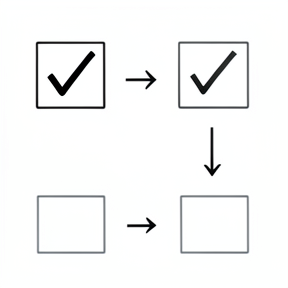
ADHD brains often struggle with large, abstract goals. Big plans can feel exciting at first, but hard to sustain.
Small progress, on the other hand, creates momentum.
Each completed step:
- Builds confidence
- Reduces mental load
- Creates a sense of movement
- Makes the next step easier
This is also why tracking small wins through a done list can boost motivation quickly.
You Do Not Need to Do Everything at Once
One of the biggest shifts you can make is letting go of the idea that you need to manage everything at the same time.
You do not.
You just need a starting point.
And most of the time, that starting point is one small, clear action.
Final Thoughts
If you feel overwhelmed often, it is not because you are incapable. It is usually because your brain is being asked to hold too much at once.
The One Thing Rule works because it reduces that load immediately. It gives your brain something clear, manageable, and possible to act on.
You do not need a perfect system.
You just need one next step.
If overwhelm is something you deal with regularly, you might also find The 5-Minute Rule, Why You Can’t Start Tasks, or The Body Doubling Method helpful for building momentum in a way that actually works with your brain.
Frequently Asked Questions
What is the One Thing Rule for ADHD?
The One Thing Rule is a simple strategy where you focus on one task or one step at a time to reduce overwhelm and make it easier to start and follow through.
Why does focusing on one thing help ADHD?
ADHD brains can become overwhelmed when handling multiple inputs at once. Reducing focus to one clear task lowers decision fatigue and makes starting easier.
What if I cannot decide what my one thing is?
Choose the smallest useful step available. It does not need to be perfect. The goal is to reduce overwhelm and begin moving forward.
Can I combine this with other ADHD strategies?
Yes. The One Thing Rule works well with tools like timers, body doubling, and the 5-minute rule to create structure and momentum.