Why You Can’t Start Tasks (ADHD Task Paralysis Explained + Simple Fixes That Work)
ADHD task paralysis is one of the most frustrating experiences — knowing what you need to do but feeling completely unable to start.
If you have ever sat down to do something important, looked at the task, and then somehow ended up scrolling, staring into space, or doing literally anything else, you are not alone.
You may know exactly what needs to be done. You may even want to do it. But instead of starting, your brain seems to freeze. That experience can feel frustrating, confusing, and honestly a little defeating. A lot of people describe it as feeling lazy, unmotivated, or broken. But in many cases, especially for neurodivergent people, that is not what is happening at all. It’s time to reset your day.
This is often called ADHD task paralysis.

If you want a broader overview of ADHD-friendly strategies, you can also read our full guide on ADHD productivity tips.
What Causes ADHD Task Paralysis?
Task paralysis is that stuck feeling where your brain knows there is something to do, but it cannot seem to move into action. It can happen with work, household tasks, emails, appointments, creative projects, or even things you genuinely care about. And one of the hardest parts is that the more important the task feels, the more frozen you may become.
In this article, we will look at why ADHD task paralysis happens, what is really going on behind the scenes, and some simple strategies that can help you start without making things feel harder than they need to be.
What Is ADHD Task Paralysis?
ADHD task paralysis is the experience of feeling mentally blocked when trying to begin, continue, or finish a task. It is not just procrastination in the casual sense. It is often a mix of overwhelm, pressure, emotional resistance, decision fatigue, and difficulty activating the brain’s executive functioning system.
To someone on the outside, it may look like avoidance. But on the inside, it usually feels more like gridlock.
Why ADHD Brains Struggle to Start Tasks
ADHD affects more than attention. It also affects executive function, which includes planning, prioritizing, organizing, switching between tasks, and getting started.
If you’re struggling to get started, the Task Breaker Tool can help you turn overwhelming tasks into simple steps.
1. The Task Feels Bigger Than It Looks
Many tasks are not mentally processed as one simple action. Instead, your brain sees all the hidden steps at once.
That creates overwhelm before you even begin. When a task feels too large or unclear, your brain hesitates.
2. Dopamine Plays a Role
ADHD is closely tied to dopamine regulation. Tasks that are boring or repetitive often do not create enough mental interest to spark action.
3. Perfectionism Makes Starting Harder
If a task has to be done perfectly, your brain may delay starting altogether.
4. Emotional Weight Gets Attached to the Task
Sometimes the block is not the task itself, but how the task feels. This is why many people ask, why they procrastinate even when they care.
Simple Fixes That Can Help You Start
1. Use the 3-Task Rule
Limit your focus to just three tasks per day to reduce overwhelm.
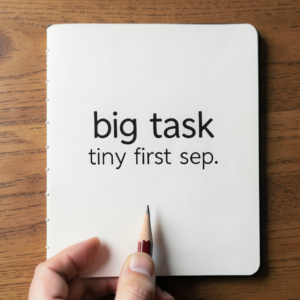
2. Shrink the First Step
Make the starting point so small it feels easy.
3. Try the 5-Minute Rule
Commit to just five minutes. Learn more here: The 5-Minute Rule.
4. Remove Extra Decisions
Reduce choices to make starting easier.
5. Use Body Doubling
Work alongside someone else. More on this here: Body Doubling Method.
6. Use a Done List
Track what you’ve completed. See: Done List Trick.
Real-Life Examples of ADHD Task Paralysis
ADHD task paralysis can show up in everyday situations like:
- Opening your laptop but not starting the task
- Knowing what to do but feeling mentally “stuck”
- Avoiding tasks until the last minute
- Switching between tasks without finishing anything
These are not signs of laziness — they are common experiences linked to ADHD and executive function challenges.
Final Thoughts
You are not lazy. You are not broken. Your brain simply needs a different approach to starting tasks.
Instead of asking, “Why can’t I do this?” try asking, “What would make this easier to start?”
That shift alone can change everything.
Explore More Neuro-Friendly Tools
If this helped you, you’re going to love the next guides in this series. Each one breaks down a common ADHD struggle into simple, practical tools you can actually use.
- The 5-Minute Rule That Helps ADHD Brains Start Anything
- Why Traditional To-Do Lists Don’t Work for ADHD
- The Dopamine Menu Trick That Makes Tasks Easier
- Why You Procrastinate Even When You Care
You don’t need to fix yourself. You just need tools that work with your brain.